News
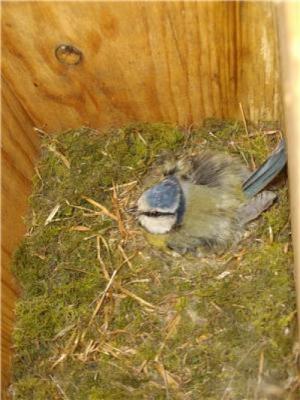
Apr. 15, 2013 — Researchers believe that the size of birds' nests created in response to changing weather patterns may be partly to blame for reproductive failures over the last two years.
An article in the April edition of The Biologist, the Society of Biology's magazine, explains that birds produce different sized nests depending on the weather.
Written by Dr Charles Deeming, senior lecturer at the University of Lincoln and a Fellow of the Society of Biology, the article explains that nests are far more than just a way to hold eggs and chicks.
Dr Deeming said: "Over the past few years scientific interest in nests has increased, with studies ranging from nest composition, construction behaviour and thermal properties to the use of nests as potential signals to mates. We've realised that the factors affecting nest construction are far more complex than we had previously understood."
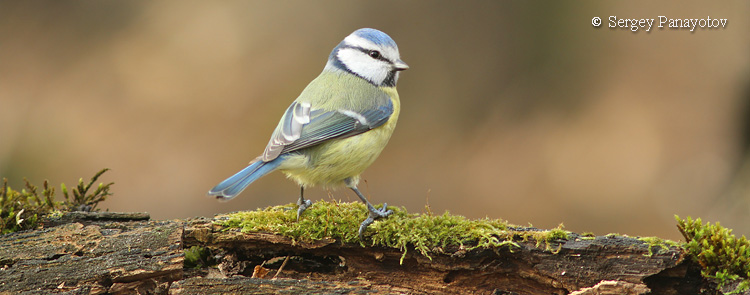
Dr Deeming's studies of great tits and blue tits breeding in nest boxes at the University's Riseholme Park campus have shed light on how nests are built and how they function.
He found that individual birds can build extremely different nests each year. Cold weather on the days the bird was adding lining to the nest meant they built heavier nests than when the weather was warmer. This suggests that an important function of the nest is to keep the bird warm while it sits on the eggs. Once the nest is lined, the female will lay the first egg, which will be incubated for around two weeks. This means a larger, warmer nest will be important for keeping the bird warm if the weather is cold.
However, as climate change brings more unpredictable weather patterns the way birds construct nests will be affected. In both 2011 and 2012, for example, early spells of warm weather were followed by much lower temperatures.
At Riseholme, this seems to have had devastating effects on reproductive success. Birds building in these early warm periods are likely to construct a light, poorly insulated nest. If the weather subsequently turns cooler, having a poorly insulated nest may have an adverse effect on their reproductive success.
Birds use a wide range of materials in their nests, from moss to sheep's wool, and their availability may also be altered by climate change. Certain plants may go extinct in local areas, so some species could lose a key nesting material.
Dr Mark Downs, chief executive of the Society of Biology, said: "Climate change will have a large effect on our ecosystems and our food production, and Dr Deeming's is one of many studies demonstrating that the effects will be complex and difficult to predict. It is essential that we continue to study how organisms adapt to climate change and how we can best mitigate its effects."
Dr Deeming concludes: "Much more research is needed to determine how local climate affects nest construction. Only then will we start to understand how climate change is likely to affect nest building, and hence reproductive success."