News

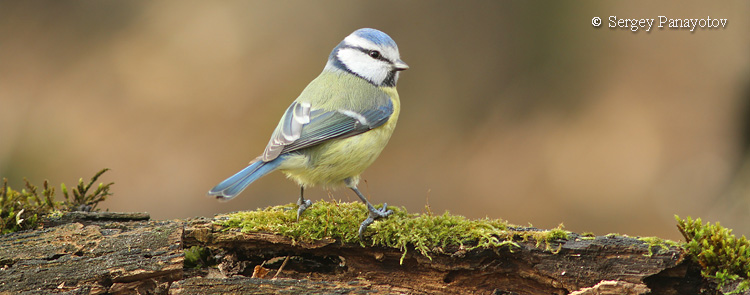
Artificial light in cities exerts negative effects on humans, animals, and their environment. In an ongoing research project, behavioral biologists at Vetmeduni Vienna are investigating how blue tits in the Viennese Forests react to "light pollution." The study might help to understand effects of "light-at-night" on reproductive behavior of birds. In consequence, it could help developing concepts, minimizing negative effects on the lives of animals and the ecological system, by reducing light sources in specific regions. The research project started this year and is supported by the city of Vienna.
The so-called circadian rhythm or "body clock" influences the behaviour of living beings. Light is an important "Zeitgeber," especially for birds. Based on light, birds know when it is time to mate, breed, forage or migrate. If the natural day and night rhythms are affected by artificial light, the natural behavioral patterns of the animals may also change.
The "light-at-night"-effect disturbs migrating birds
Katharina Mahr and Herbert Hoi from the Konrad Lorenz Institute of Ethology at the Vetmeduni Vienna are interested in the effects of "light-at-night" in wild birds. "There are studies investigating the effect of artificial light on the orientation and activity of birds. Light, for instance, limits the sense of orientation, but also activity patterns in birds to a great extent," study coordinator Mahr explains.
The Viennese research team is one of the first to experimentally test the effects of artificial light in the natural environment of animals, by actively manipulating ambient light conditions. The team is particularly interested in the reproductive behavior of blue tits in the Viennese Forests. "Blue tits seem to be good model species for this study because we know a lot about their mating and reproductive behaviour. Besides, they frequently breed in cities and therefore are exposed to artificial light," Mahr states.
Research using LED lights in the forest
Over a period of about three weeks, LED lights illuminated various areas of the Viennese Forests for two additional hours in the morning, before sunrise, and in the evening after sunset. In this period scientists examined, activity patterns such as singing and mating behavior, growth and development of the nestlings, as well as stress hormones. The number of extra-pair copulations females perform, could be affected and offspring may more frequently originate from various fathers.
"There is evidence that the circadian rhythm influences mate choice, but does it also affect the development of nestlings?," Mahr states. "A well-known phenomenon that can be found in chicken farming is the manipulation of the day and night rhythm in order to make the animals lay more eggs."
Does light pollution affect the honesty of sexual signals?
"We assume that light at night affects the birds' strategies of choosing partners. Males, for instance, like to be in the "limelight" whereas females might prefer to "remain in the dark." Thus, light may exert different effects on the love lives of the different sexes. Besides, male blue tits are "morning singers." Particularly fit males start to sing pre-dawn songs. We also know that female blue tits tend to be unfaithful to their partners, but do so covertly. Therefore, we want to find out whether artificial light generates a certain conflict between the sexes," says Mahr.
The fact that such a conflict impairs the reproduction of tits was shown by Mahr in a previous study. http://www.frontiersinzoology.com/content/9/1/14
Besides, artificial light may cause shorter resting periods and thus impose additional stress on the fledglings.
Light possibly has impact on the entire ecological system of the woods
"More light may also affect other living beings in the Viennese Forests. Insects may for instance be affected. They are an important source of food for many inhabitants of the woods and their presence is therefore essential," says Mahr.
"Urban lights are obviously important for human safety and comfort. Nevertheless, urban planning should take into account the question of where light sources are really necessary. Illuminated billboards, for instance, can be dispensed with. Non-illuminated zones could be planned consciously. Our study is intended to encourage decision-makers to devote greater attention and thought to the subject," Mahr pleads.
The research project "Does Light Pollution affect the Breeding Performance of wild Blue Tits (Cyanistes caeruleus) in the Viennese Forest?" headed by Katharina Mahr from the Konrad Lorenz Institute of Ethology at the Vetmeduni Veinna is supported by the Hochschuljubiläumsstiftung of the City of Vienna. The study started in the beginning of 2014 and ends on the 31st of December 2014.